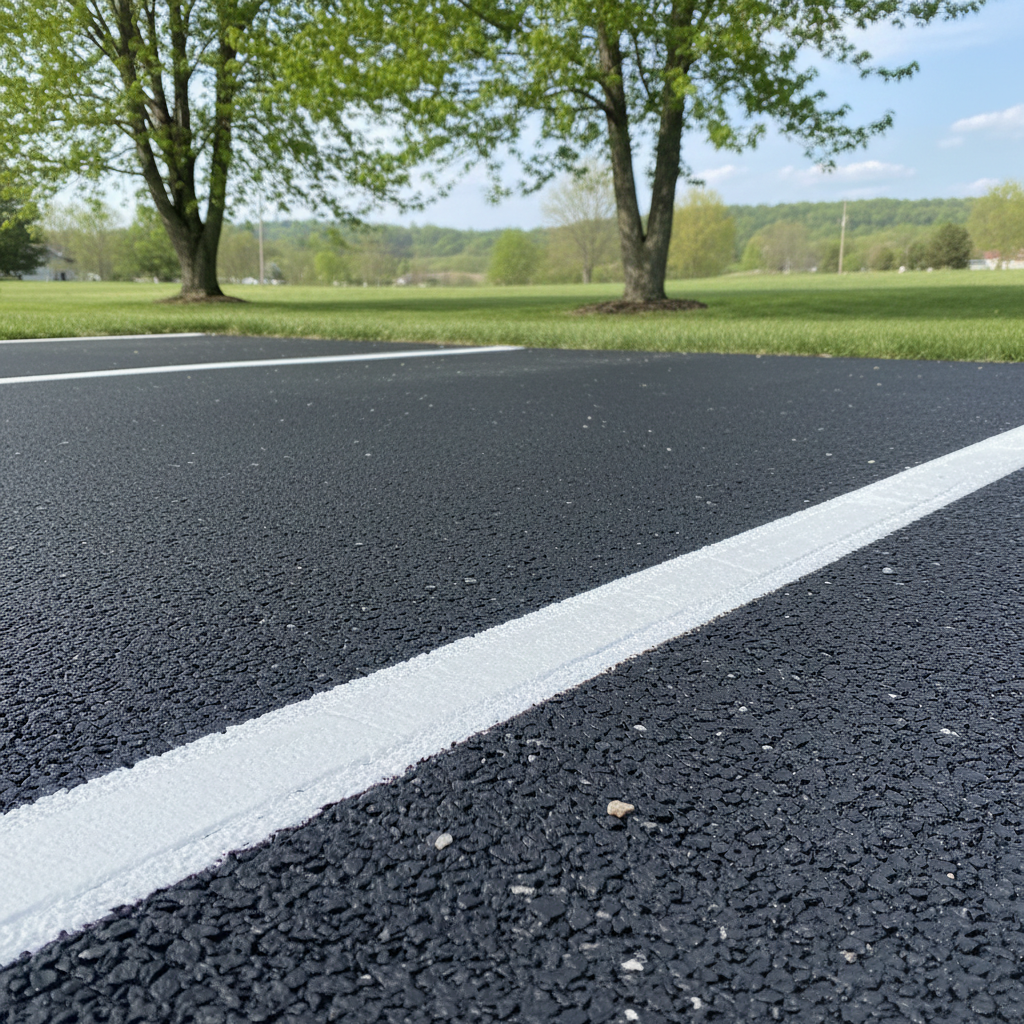
So, you’ve just sealed your driveway, or maybe you’ve got a brand-new layer of asphalt down, and now you’re staring at those crisp, dark lines. Perhaps you're thinking, "Hey, I could totally paint those parking lines or basketball court markings myself." It’s a pretty common thought, especially for homeowners who like to tackle projects. And you know what? Depending on what you’re trying to do, you absolutely can.
Before You Even Grab a Paintbrush
First things first: let's talk about the surface you're working with. Striping isn't just about slapping on some paint. It’s about making those lines stick around and look good for a while, you know? If your asphalt is old, cracked, or hasn't seen a sealcoat in years, any paint you put down won't last. It’ll peel, fade, and just generally look like a mess pretty quickly. So, step one is making sure your asphalt is in decent shape. If it needs patching or sealing, get that done first. A fresh sealcoat gives the striping paint a much better surface to grab onto.
Next up, think about the weather. This is Bowling Green, after all. We get all four seasons, sometimes in a single week! You really don't want to stripe when it's too cold (under 50°F is usually a no-go for most paints) or too hot, or if rain is even a possibility. Humidity can also mess with how fast things dry. Pick a dry, mild day, ideally with low humidity. This isn't just about your comfort; it’s crucial for the paint to cure correctly.
Finally, what’s your goal? Are you just putting down a simple free-throw line for a hoop? Or are you trying to mark out multiple parking spots for a home business or a shared driveway? How complex the job is makes a huge difference in deciding if it’s a DIY project or not.
What You Can Totally DIY
For simple stuff, like a single parking spot, a basketball court key, or maybe some game lines for the kids, you can definitely handle it yourself. Here’s what you’ll need:
- Good Quality Striping Paint: Seriously, don't cheap out here. Regular house paint just won't cut it. You need paint made specifically for asphalt or traffic marking. It’s tougher and designed to stand up to cars and weather.
- A Measuring Tape and Chalk Line: Being precise is key. Crooked lines? Nobody wants those.
- Stencils (Optional): If you need numbers or arrows, stencils are a lifesaver.
- Applicator: For small jobs, a roller with an extension handle or a brush can work. For slightly bigger areas, you can rent a small walk-behind striping machine from a local equipment rental place. These make lines much straighter and more consistent.
- Safety Gear: Gloves, eye protection, and maybe a mask if paint fumes bother you.
The process itself is pretty straightforward: clean the surface, measure and mark your lines with chalk, tape off the edges if you want super crisp lines (though for parking lots, that's often overkill), and then apply the paint. Two thin coats usually work better than one thick one. Let it dry completely between coats and before you drive on it.
When to Call Neighborly Asphalt Co.
Now, here’s where it gets a bit tricky. If you’re looking at anything more involved than a couple of lines, you should probably call in the pros. This includes:
- Multiple Parking Spaces: Especially if you need them spaced correctly for ADA compliance or just to use the space efficiently. Getting multiple lines parallel and consistently spaced is way harder than it looks.
- Complex Layouts: Arrows, directional markings, handicap symbols, fire lanes, loading zones – these all need specific measurements and often specialized stencils and equipment to do right.
- Large Areas: If you’ve got a big parking lot, even a small one for a church or a local business, doing it by hand will take forever, and the results probably won't be uniform.
- Regulatory Compliance: If your striping has to meet specific codes (like ADA parking requirements), you really want someone who knows those rules. Messing this up can lead to fines or accessibility problems.
- Durability and Professional Finish: We use commercial-grade striping machines that put down paint evenly and quickly, making sure you get consistent thickness and sharp edges. Our paints are made for heavy traffic and the specific soil conditions we have around here — like the clay-rich soil in some parts of Warren County that can hold moisture longer, impacting paint adhesion if not prepped right. This means your lines will last longer and look better than a DIY job, no question.
We’ve got the specialized equipment, the right paints, and the experience to lay down lines that are straight, accurate, and durable. We can also help you figure out the best layouts for traffic flow and parking efficiency. It’s not just about painting; it’s about good planning and solid execution.
After the Striping is Done
Whether you DIY or hire us, taking care of it afterward is pretty simple. Let the paint cure fully before driving on it. This can take anywhere from a few hours to a day or two, depending on the paint type and weather. Once it’s dry, just keep it clean. Regular sweeping or blowing off debris will help prevent wear and tear. If you notice any fading or peeling down the road, it’s time for a refresh. Good striping isn't just for looks; it makes your property safer and more organized.