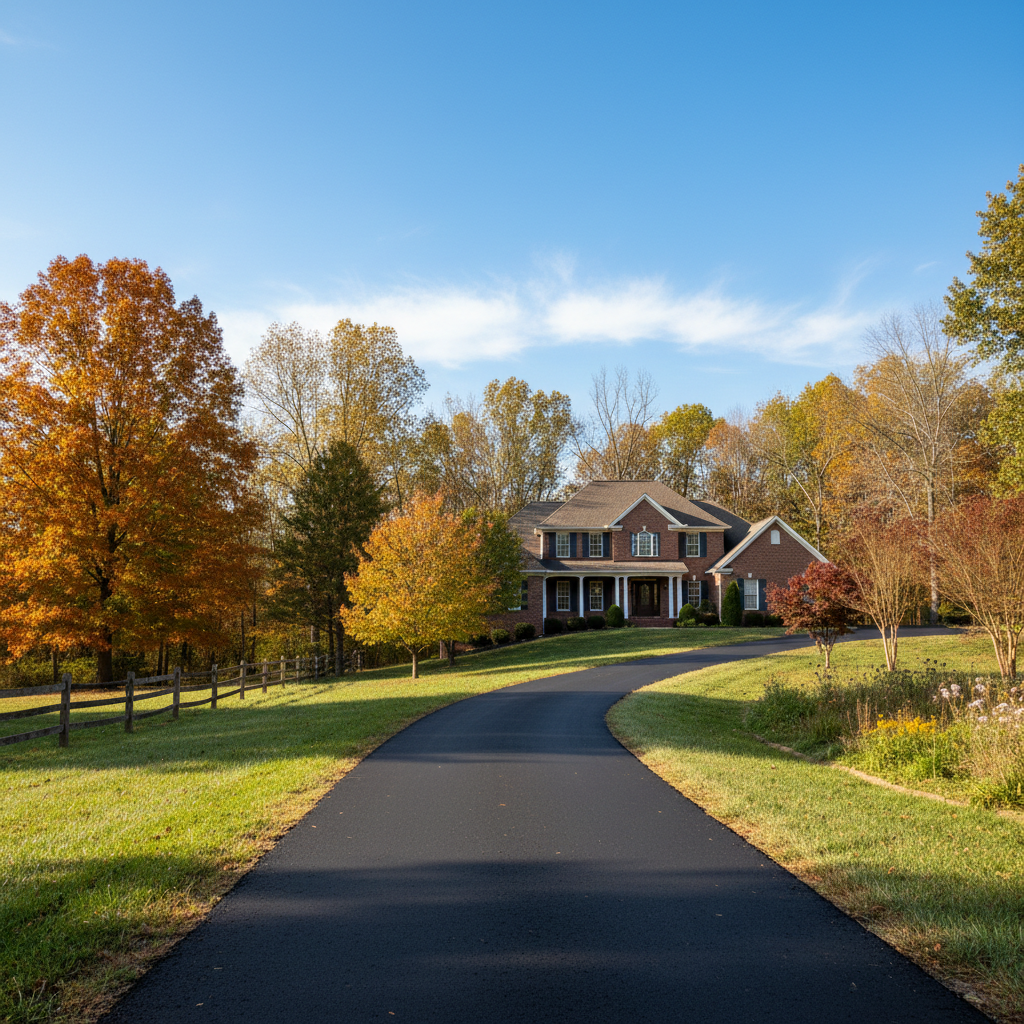
Driveways around Fountain Square last for decades while others start crumbling after just a few years because of timing and weather. Here in Warren County, the local climate does not do asphalt any favors. We get those sticky, humid southern summers followed by sudden winter drops where the temperature swings wildly in twenty-four hours. Property owners trying to figure out when to pave or patch a driveway cannot just pick a random Tuesday. You have to work with the weather, not against it.
The Problem with Bowling Green Summers
July and August are brutal months for paving. When the ambient temperature hits the nineties and the humidity is thick, fresh asphalt has a really hard time cooling down and curing properly. Liquid asphalt acts as the glue holding your aggregate together. If that glue stays too hot for too long under heavy equipment or vehicle tires, it shifts. Neighborly Asphalt Co often gets calls from property owners off Campbell Lane wondering why their new surface is scuffing up during a heatwave. Asphalt likes moderate warmth to cure, but extreme surface heat messes with the compaction process.
Why Spring and Fall Are the Sweet Spots
Most local contractors will tell you that spring and autumn are prime time for paving. During these months, the daytime temperatures hover comfortably in the seventies. The ground is not frozen solid like it is in January, and it has not turned into a bake oven yet. Neighborly Asphalt Co loves scheduling Asphalt Paving projects during these windows because the mix stays workable, our rollers can get the right compaction ratio, and the material cures at a steady, even rate. You get a much denser, tougher driveway that way.
Surviving the Winter Freeze-Thaw Cycle
Winter in Bowling Green is tricky. We rarely get buried in feet of snow for months on end, but what we do get is worse for asphalt: constant freezing and thawing. Water finds its way into tiny hairline cracks during a rainy December afternoon, and then that same water turns to ice overnight, expanding and busting the asphalt apart from the inside out. By the time March rolls around, those little cracks have turned into potholes. That is why keeping up with minor maintenance before the first hard freeze is very important.
Protecting Your Investment All Year Long
You do not need to baby your driveway, but you do need to pay attention to it as the seasons change. Keep heavy debris and wet leaves cleared off in the fall because rotting organic matter holds moisture against the surface and breaks down the binder. In the spring, take a walk down your driveway and look for any new cracks or pooling water. Addressing small issues early stops them from turning into massive headaches later on. Good asphalt care is not about doing one giant project and forgetting about it. It is about staying a step ahead of the weather and letting your pavement do its job year-round.