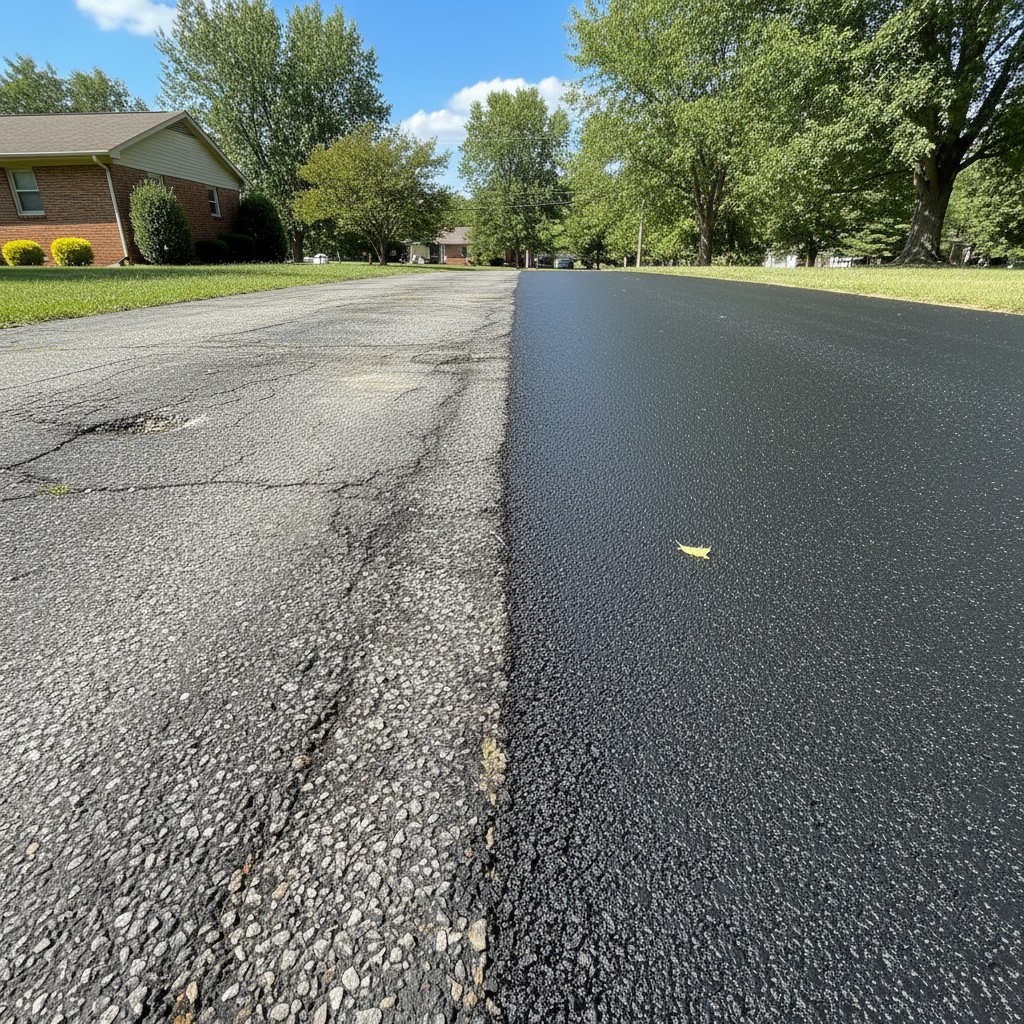
Alright, let's talk driveways. When your asphalt starts looking a bit rough, you've generally got two main options to think about: an overlay or a full tear-out and replacement. I get asked about this a lot here in Bowling Green, and honestly, there's no single right answer for everyone. It really depends on what's going on underneath your existing asphalt, what your budget looks like, and how long you want it to last, you know?
What's an Asphalt Overlay?
Think of an overlay like putting a fresh coat of paint on a wall. We're not tearing down the wall; we're just making it look new again. For an asphalt driveway, this means we'll clean the existing surface really well, fix any major cracks or potholes, and then put a new layer of asphalt right on top of the old one. This new layer is usually about 1.5 to 2 inches thick. It's a quicker process, and it typically costs less upfront.
Now, for an overlay to actually work, your existing driveway has to be in pretty decent shape. We're talking about a stable base with no big structural problems. If you've got widespread alligator cracking, significant dips, or spots where the asphalt is crumbling down to the gravel, an overlay probably won't cut it. It's like putting a band-aid on a broken leg; it might look better for a bit, but it won't fix the underlying problem. I've seen too many overlays fail too soon because folks tried to save a buck on a driveway that really needed more work.
When a Full Replacement is Your Best Bet
A full replacement is exactly what it sounds like. We come in, tear out all the old asphalt, dig down to the subgrade, and then rebuild your driveway from the ground up. This means we lay down and compact a new gravel base, and then put down two layers of fresh asphalt – usually a binder course and then a surface course. It's a bigger job, takes more time, and yes, it costs more.
But here's the thing: if your driveway has seen better days – maybe it's 20+ years old, has drainage problems, or you're seeing a lot of potholes and cracks that keep coming back even after patching – a full replacement is often the smarter long-term investment. Especially with our clay soils around Bowling Green, if your base isn't stable, you're going to have problems no matter how many layers of asphalt you put on top. A new, properly compacted base will give you a driveway that lasts for decades, not just a few years. That's a big difference.
Cost, Durability, and Maintenance Differences
Cost
An overlay will almost always be cheaper upfront. You save on labor for tear-out and disposal, and you use less material overall. A full replacement is a significant investment because we're essentially building a new road. Think of it this way: an overlay might be 40-60% of the cost of a full replacement, depending on how your existing driveway looks.
Durability
This is where the rubber meets the road, literally. An overlay, if done on a good base, might give you another 7-10 years of life, sometimes more. But its lifespan is directly tied to the health of the old asphalt underneath. A full replacement, with a properly prepared base and new asphalt, should easily last 15-25 years, sometimes even longer with good maintenance. You're getting a fresh start, and that really pays off in the long run.
Maintenance
Both options benefit from regular sealing every 2-3 years. That's just good practice for any asphalt driveway in Kentucky's weather. With an overlay, you might find new cracks appearing faster if the old cracks underneath weren't fully addressed or if the base keeps shifting. With a full replacement, you're starting with a clean slate, so maintenance is usually more about prevention than reaction for the first decade or so.
My Recommendation for Bowling Green Homeowners
Look, I'm not going to tell you to spend more money than you need to. If your driveway is relatively young (under 15 years), has good drainage, and only shows minor surface cracking or fading, an overlay can be a perfectly good, cost-effective solution to refresh its appearance and extend its life. It's a great option for a lot of folks in neighborhoods like those around Plano Road where the original driveways might be getting a little worn but are still structurally sound.
However, if your driveway is old, has significant structural issues, major potholes, constant standing water, or if you're planning on staying in your home for the long haul, a full replacement is almost always the better investment. You'll get a more durable, longer-lasting driveway that will add more value to your home and save you headaches down the road. It's more money upfront, but you won't be dealing with repairs or another major project for a very long time, which is nice.
The best way to figure out what's right for you? Have a professional from Neighborly Asphalt Co. come out and take a look. We'll give you an honest assessment of your driveway's condition and help you weigh the pros and cons for your specific situation. No pressure, just good advice.