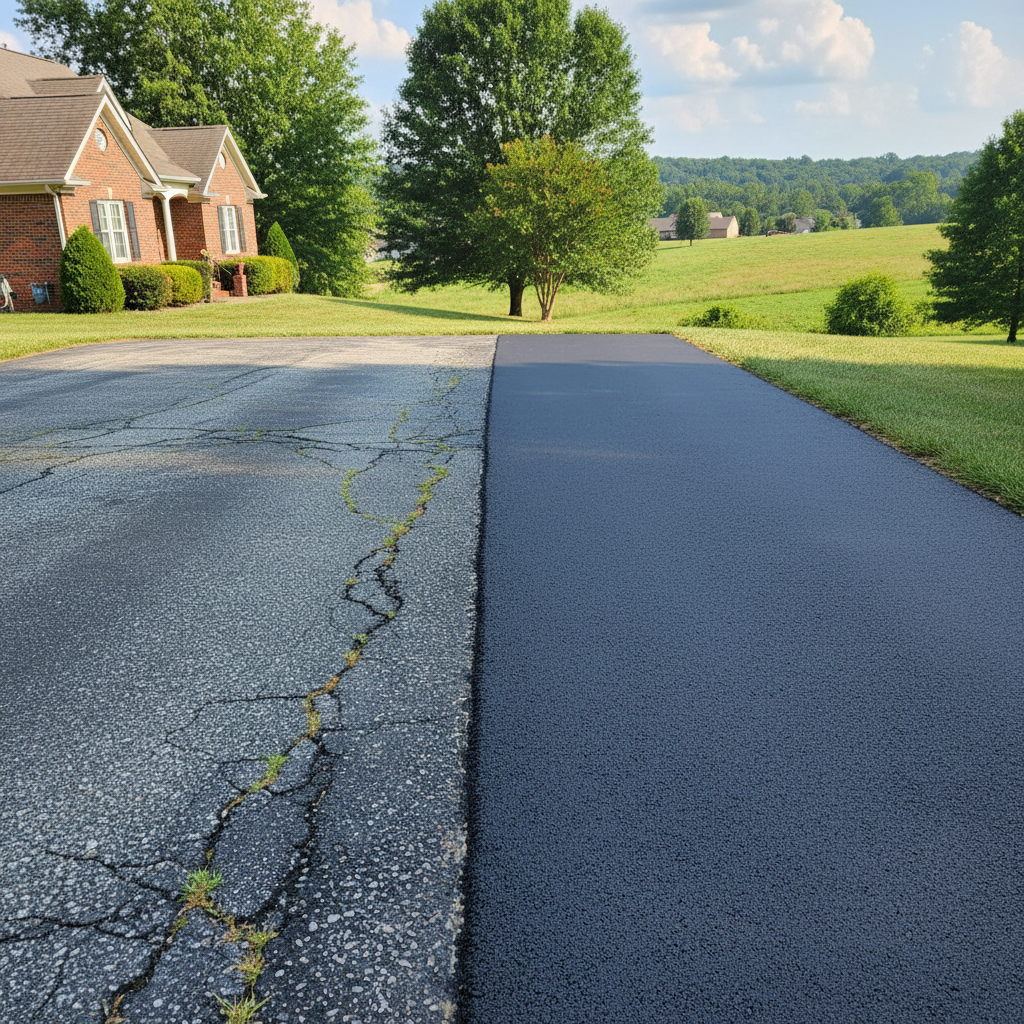
Alright, let's talk driveways. Specifically, when your asphalt's seen better days, you've generally got two main ways to go: a full-on replacement, or what we call an asphalt overlay. Homeowners here in Bowling Green ask me about this all the time, and it's not always a clear-cut answer. You want to make the right call for your wallet and your property, so let's get into it.
What's an Asphalt Overlay?
Think of an overlay like putting a fresh coat of paint on a wall. We're not tearing anything out; we're just adding a new layer of asphalt right on top of your existing, structurally sound driveway. First, we'd clean the surface really well, maybe fill any bigger cracks, and then apply a tack coat – that's like a glue to help the new layer bond. Then, we lay down a fresh layer of hot asphalt, usually about 1.5 to 2 inches thick, and compact it.
Pros of an Overlay:
- Cost: This is usually the big one. An overlay is almost always significantly cheaper than a full replacement because we're not doing all that demolition and hauling away old material.
- Speed: It's a quicker job. Less demo means less time on your property and you can get back to using your driveway faster.
- Less Disruptive: Since we're not digging up your yard, it's generally less messy and less disruptive to your landscaping.
Cons of an Overlay:
- Underlying Issues: This is crucial. If your existing driveway has major structural problems – like widespread deep cracks, significant potholes, or areas that are sinking due to a bad base – an overlay is just a band-aid. Those problems will eventually show through the new layer, sometimes pretty quickly.
- Drainage: Adding a new layer raises the height of your driveway. We've got to be careful to make sure it doesn't create new drainage problems against your garage slab, sidewalks, or landscaping. This is especially important in areas like Bowling Green where we get some serious rain.
- Lifespan: While it looks great initially, an overlay typically won't last as long as a properly installed full-depth replacement, especially if there were minor issues underneath. You're usually looking at 7-15 years, depending on traffic and original condition.
What's a Full-Depth Replacement?
This is the whole enchilada. We completely tear out your old asphalt driveway, haul it away, and then start from scratch. We'll inspect and potentially re-grade your sub-base (the dirt underneath), lay down a fresh layer of aggregate (crushed stone), compact it thoroughly, and then install new layers of asphalt – typically a binder course for strength and a surface course for smoothness and durability. This is what we do when we're building a brand new driveway for a new house in say, The Preserve or something.
Pros of a Full-Depth Replacement:
- Longevity: When done right, a full replacement will last a long, long time – often 20-30 years or more with proper maintenance. You're getting a completely new, solid foundation.
- Structural Integrity: You're fixing any underlying problems with the base, which is key to a durable driveway. No more worrying about old cracks reappearing.
- Better Drainage Control: We can establish optimal grades and slopes from the ground up, ensuring excellent water runoff.
- Appearance: It's a brand new driveway, top to bottom. It's going to look perfect.
Cons of a Full-Depth Replacement:
- Cost: This is the biggest hurdle for most folks. It's a much more involved process, so it costs more upfront.
- Time & Disruption: It takes longer, involves heavy equipment, and there's more mess. Your driveway will be out of commission for a few days, sometimes longer.
- Environmental Impact: More material needs to be removed and disposed of, and more new material brought in.
So, Which One Do You Need?
Honestly, it boils down to the condition of your existing driveway's foundation. If your driveway has:
- Minor surface cracks
- Fading or oxidation
- No significant potholes or depressions
- A solid, stable base with good drainage
Then an overlay could be a really smart, cost-effective solution for you. You'll get a beautiful, fresh look and several more years of life out of it.
However, if your driveway shows signs of:
- Widespread alligator cracking (looks like alligator skin)
- Numerous deep potholes
- Areas that are sinking or heaving
- Poor drainage leading to standing water
- The edges are crumbling badly
Then you're almost certainly looking at a full-depth replacement. Trying to overlay these problems is just throwing good money after bad. The underlying issues will just crack through the new layer, and you'll be right back where you started, only poorer.
Here in Bowling Green, we deal with some pretty serious freeze-thaw cycles in the winter, and that can be brutal on asphalt, especially if the base isn't well-drained. That's why a good, solid base is so important. If your base is compromised, you've got to address it.
My Recommendation for Bowling Green Homeowners
For most residential driveways in our area, if you're seeing widespread structural failure, don't cheap out. Go for the full-depth replacement. It's a bigger investment upfront, but it'll save you headaches and money in the long run because it lasts so much longer and performs better. You're getting a truly new driveway built to handle our local conditions.
If your driveway is generally in good shape but just looks tired, an overlay is a fantastic option. It's a great way to refresh your curb appeal without breaking the bank.
The best way to know for sure? Get a professional assessment. I'm happy to come out, take a look, and give you an honest opinion on what makes the most sense for your specific situation and budget. We've seen it all at Neighborly Asphalt Co., and we'll tell you straight.