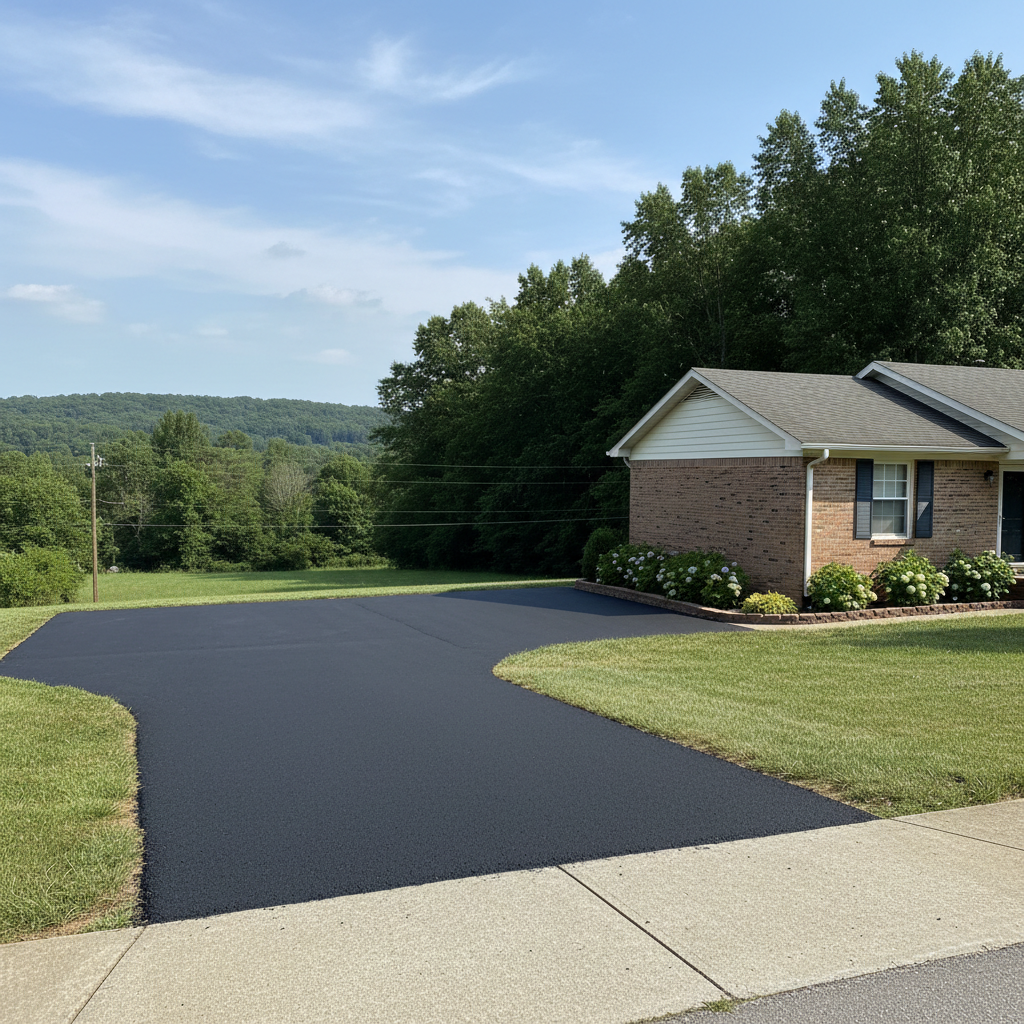
So, you're probably wondering what a new asphalt driveway will actually cost you. It's a fair question, and honestly, it's usually the first thing folks ask me when they call Neighborly Asphalt Co. There isn't just one simple answer, because every job is a little different, but I can definitely give you some solid numbers and explain what goes into that final price tag.
What Makes a New Driveway Cost What It Does?
A lot of things factor into the cost, way more than just the square footage. Think of it like building a house; you've got the foundation, the materials, the labor, and all sorts of little details that add up.
- Size and Shape: This is the most obvious one, right? A bigger driveway means more material and more time. A long, straight driveway is usually cheaper per square foot than a short, curvy one with lots of turns or odd angles. Those curves, you see, need more precision and hand work.
- Existing Conditions: Are we putting in a brand new driveway where we're just grading dirt, or are we tearing out an old, cracked concrete or asphalt one? Demolition and hauling away old material definitely adds to the cost. If your current base is shot, we'll need to fix that too. Sometimes, especially in older parts of Bowling Green near Fountain Square, we find all sorts of buried surprises that need handling.
- Base Preparation: This is probably the most critical part of any paving job, and it's where some contractors cut corners. A good, stable base of compacted aggregate (that's crushed stone) is what makes your driveway last. If the ground underneath isn't solid, your asphalt won't be either. We might need to bring in extra fill, compact it in layers, or even address drainage issues.
- Asphalt Thickness: Most residential driveways typically get 2-3 inches of compacted asphalt. If you've got heavy vehicles, like an RV or a work truck, you might need a thicker layer – say 3-4 inches – which naturally costs more.
- Drainage: Proper drainage is key to preventing water from sitting on your driveway and causing damage. We might need to install culverts, swales, or adjust the grading. This isn't just about the asphalt itself, but it's crucial for its longevity, believe me.
- Accessibility: Is your property easy to get to with our heavy equipment? If we have to haul materials a long way or work in a tight space, that can add a little to the labor cost.
Typical Residential Asphalt Costs in Bowling Green
Alright, let's talk numbers. For a standard residential asphalt driveway here in Bowling Green, including proper base prep and 2-3 inches of compacted asphalt, you're generally looking at a range of $3.00 to $7.00 per square foot.
That's a pretty wide range, I know, but it accounts for all those factors I just mentioned. Here's a breakdown:
- New Driveway (no old material to remove): For a typical 1000-square-foot driveway, you might be in the $3,000 to $5,000 range. This assumes good existing soil and straightforward access.
- Replacement Driveway (tear out and replace): This will be on the higher end, often $5,000 to $7,000+ for that same 1000 square feet. The demolition, hauling, and potential base repair drive up the cost.
- Larger or Complex Driveways: If you've got a really big driveway, say 2,000 square feet or more, the per-square-foot cost might drop a bit due to economies of scale. But if it's got lots of turns, steep grades (like some of those properties out towards Plum Springs), or tricky drainage, expect to be on the higher side of the range.
Keep in mind, these are averages. Every job gets a custom quote.
What Should a Good Quote Include?
When I give you a quote from Neighborly Asphalt Co., I make sure it's clear what you're getting. You should expect the same from any reputable contractor. A good quote should detail:
- Site Preparation: This covers grading, excavation, and removal of any existing material.
- Base Material: The type and thickness of the crushed aggregate base (e.g., 6 inches of compacted #57 stone).
- Asphalt Material: The type of asphalt mix (e.g., surface course mix) and its compacted thickness (e.g., 2.5 inches compacted).
- Compaction: How the asphalt will be compacted to ensure durability.
- Drainage Solutions: Any culverts, swales, or grading adjustments.
- Edge Support: How the edges of the driveway will be supported to prevent crumbling.
- Cleanup: What they'll do to clean up the site when the job's done.
- Warranty: What kind of warranty is offered on the work.
If a quote just says